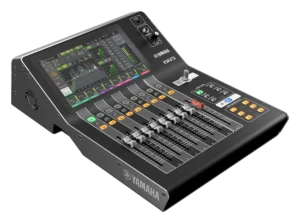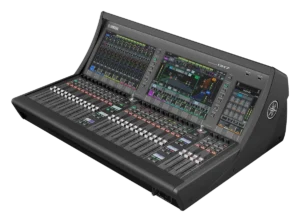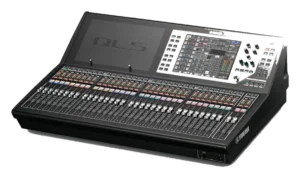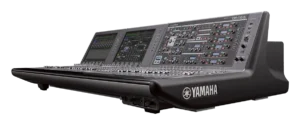
Yamaha CL Series
Showcaller AI runs Yamaha CL5, CL3 and CL1 consoles by voice or chat, over Yamaha's own remote control protocol. It includes scene recall and a read of the last recalled scene.
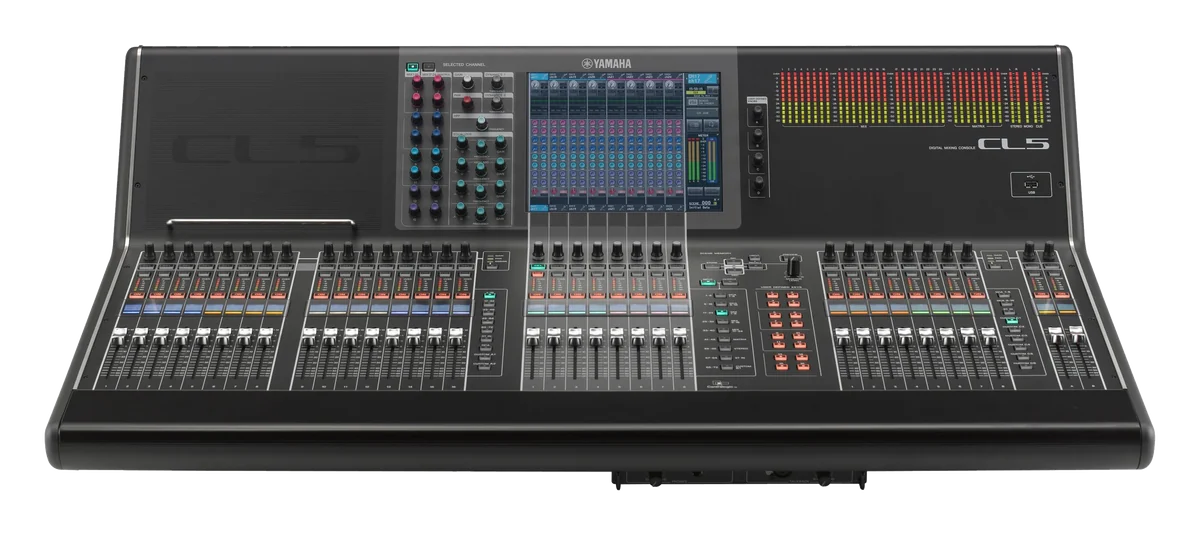
Overview
The Yamaha CL Series with Showcaller
The Yamaha CL series is a family of Dante-networked digital consoles. The CL5 has 72 mono and 8 stereo inputs. The CL3 has 64 mono and 8 stereo, and the CL1 has 48 mono and 8 stereo. All three share 24 Mix buses, 8 Matrices, 16 DCA groups and 300 scene memories. They also share 8 local analog inputs and outputs, three MY expansion slots and a 10-inch touch panel. They connect to I/O racks over Dante. Yamaha now lists the CL series as discontinued. Still, product pages, specs and downloads remain on Yamaha’s site.
How Showcaller connects to the Yamaha CL series
Showcaller connects to the console’s NETWORK connector, the RJ-45 port Yamaha provides for CL Editor. It uses Yamaha’s native remote control protocol on TCP port 49280, through the Showcaller Bridge App. No login is needed. The operator asks by voice or in chat, for example mute the audience mic or Mix 6 down 3 dB. They can also ask send more of the lectern to Mix 2 or mute the delay Matrix. Showcaller then calls the matching Tool Function. It reads every change back from the console before it reports it done, and it reports any mismatch. The Yamaha mixer integration page lists every function.
Scene recall on CL consoles
Scene recall is where the CL differs from the DM7 and Rivage PM in Showcaller. It is available on CL and QL consoles. On the Enterprise plan, Showcaller recalls a stored scene. It can report which scene the console last recalled. When the console reports it, Showcaller can also say whether the mix has changed since. A recall replaces the whole live console state, so Showcaller asks the operator to confirm first. For a conference with a scene per session, that means go to the panel scene becomes a single, confirmed request.
Tool Functions by plan
Starter covers input faders and mutes, the Main Stereo master and the Mix bus masters, with reads for each. Pro adds Matrix masters and the CL’s DCA groups. It also adds each input’s send level and on/off state to a Mix bus. The same Tool Functions apply to the CL5, CL3 and CL1. The models differ in input count and fader layout, not in what Showcaller can do. For full specs, see Yamaha’s CL series page.
What you can do
Run the Yamaha CL Series by voice or chat
Scene recall on CL
Recall a stored scene and ask which scene was recalled last and whether the mix has changed since (Enterprise). Recall is confirmed with the operator first.
Mix and Main masters
Ride and mute the Main Stereo master and the 24 Mix bus masters, and read their state (Starter).
Matrix outputs and sends
Ride and mute the 8 Matrix masters. Set each input's send level to a Mix bus and switch sends on or off (Pro).
DCA groups
Ride and mute DCA groups and read their state (Pro).
Read back on every change
Each change Showcaller makes on the CL is read back from the console, and a mismatch is reported.
Specifications
Yamaha CL Series at a glance
Mixing
- Input mixing channels
- CL5: 72 mono + 8 stereo; CL3: 64 mono + 8 stereo; CL1: 48 mono + 8 stereo
- Buses
- 24 Mix, 8 Matrix (input to Matrix supported), 1 Stereo, 1 Mono
- DCA groups / mute groups
- 16 / 8
- Scene memory
- 300 scenes; fade time 0-60 s
I/O
- Local analog inputs / outputs
- 8 / 8
- Dante
- Primary / Secondary, 64 in / 64 out
- Expansion
- 3 MY slots
Control & network
- Faders
- CL5: 16 + 8 + 8 + 2; CL3: 16 + 8 + 2; CL1: 8 + 8 + 2
- Display
- 10-inch touch panel
- Control port
- NETWORK connector, RJ-45, IEEE802.3 10BASE-T/100BASE-TX
- Manufacturer software
- CL Editor (Windows, Mac), CL StageMix (iPad)
Physical
- Width
- CL5: 1053 mm; CL3: 839 mm; CL1: 648 mm (all 299 mm high, 667 mm deep)
- Net weight
- CL5: 36 kg (79.4 lb); CL3: 29 kg (63.9 lb); CL1: 24 kg (52.9 lb)
- Power consumption
- 170 W internal power supply; 200 W with external PW800W
From Yamaha
Specifications from the manufacturer. Check the product page for the current details.
Connection
Connecting the Yamaha CL Series
- Control protocol
- Yamaha's native remote control protocol (RCP) over TCP/IP, through the Showcaller Bridge App. The Bridge App runs on a computer on the same network as the console.
- Port
- TCP 49280, the same on every supported Yamaha console. No login is needed.
- Console connection
- Connect the console's rear-panel NETWORK connector to the same network as the Bridge App computer. This is the port used by CL Editor. The Dante Primary and Secondary connectors are for audio.
- What Showcaller asks for
- The console's IP address and the console series (CL), so the right Tool Functions are offered
- Model family in Showcaller
- CL
- Connection check
- The Get status Tool Function reads back whether the console's main stereo output is on. That confirms the console is answering.
Tool Functions
Everything Showcaller can do with Yamaha Mixer
The Yamaha CL Series uses the Yamaha Mixer integration. Each group shows the plan it is included from.
FAQ
Questions about the Yamaha CL Series
Can Showcaller recall scenes on a Yamaha CL5, CL3 or CL1?
Yes, on the Enterprise plan. Showcaller recalls a stored scene after you confirm it. It can tell you which scene was last recalled. When the console reports it, it can also tell you whether the mix has changed since.
Does the CL model (CL5, CL3 or CL1) change what Showcaller can do?
No. All three are connected as 'Yamaha CL Series' and use the same Tool Functions. They differ in input channel count and fader layout.
Does Showcaller confirm changes on the CL?
Yes. Every change it makes is read back from the console before it reports it done, and a mismatch is reported.
Which Showcaller plan do I need?
Starter covers diagnostics, input faders and mutes, and the Main and Mix masters (13 Tool Functions). Pro adds Matrix masters, Mix sends and DCA groups (12 more). Enterprise adds Scene Recall (2 more). Each plan includes the Tool Functions of the plans below it.
Can Showcaller change EQ, dynamics or preamp gain on the CL?
No. The Yamaha Tool Functions cover faders and mutes, sends, DCAs and scene recall. EQ, dynamics and head amp control are not part of them.
Same integration
Other Yamaha Mixer models
 Yamaha DM3 SeriesModel page
 Yamaha DM7 SeriesModel page
 Yamaha QL SeriesModel page
 Yamaha Rivage PM SeriesModel page