Yamaha DM7 Series
Showcaller AI runs Yamaha DM7 and DM7 Compact consoles by voice or chat, over Yamaha's own remote control protocol. It covers input faders and mutes, Mix sends and DCA groups. It also covers the Main, Mix and Matrix masters.
Overview
The Yamaha DM7 Series with Showcaller
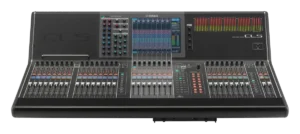
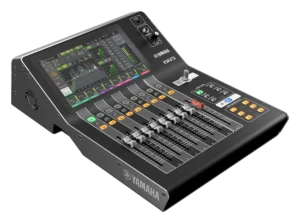
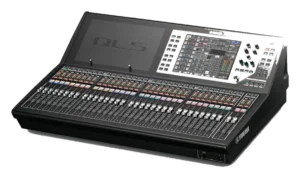
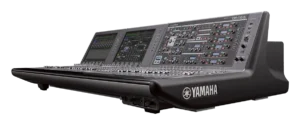
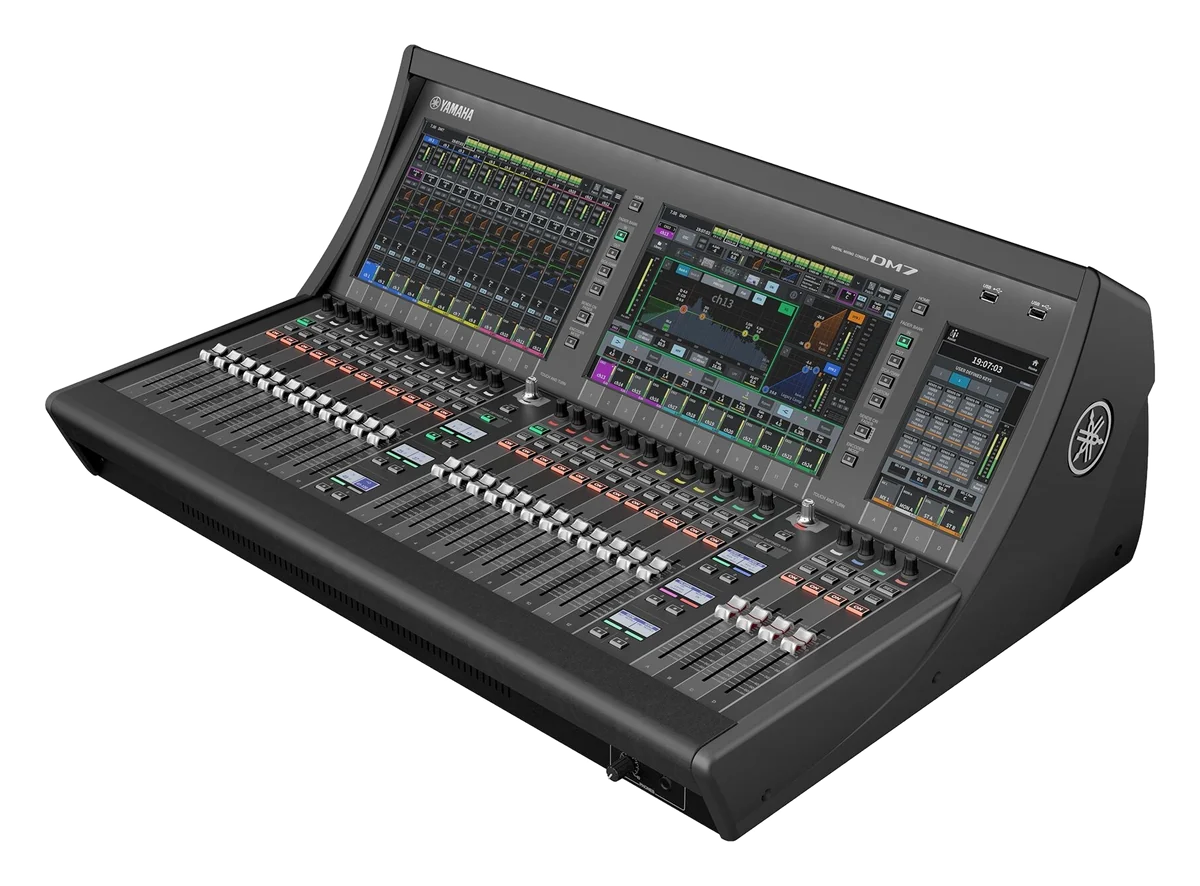
The Yamaha DM7 series is a compact, Dante-equipped digital console for live sound, broadcast and theater. The DM7 has 120 mono input channels, 32 analog inputs, two 12.1-inch touch screens and 28 faders. The DM7 Compact has 72 input channels, 16 analog inputs, one 12.1-inch screen and 16 faders. You can also rack mount the Compact. Both have 48 Mix buses, 12 Matrices, 24 DCA groups and 144 x 144 Dante channels. Both also have an RJ-45 Network connector for control software such as DM7 Editor.
How Showcaller connects to the Yamaha DM7
Showcaller connects to that Network connector using Yamaha’s native remote control protocol on TCP port 49280. It goes through the Showcaller Bridge App on the show network. No login is needed. The operator asks by voice or in chat, for example mute input 23 or Mix 14 up 2 dB. They can also ask turn off the send from the host mic to Mix 9 or pull the delay Matrix down 3 dB. Showcaller then calls the matching Tool Function. It reads every change back from the console before it reports it done, and it reports any mismatch. The Yamaha mixer integration page lists every function.
Mix buses and Matrices
The DM7’s large bus count is where this helps. The 48 Mix buses can feed wedges, in-ears and broadcast feeds. Meanwhile, the 12 Matrices can feed zones, delays and recording. Showcaller answers a request like what is the level of Mix 31 or is Matrix 4 muted directly from the console. Starter covers input faders and mutes, the Main Stereo master and Mix bus masters. Pro adds Matrix masters and DCA group faders and mutes. It also adds each input’s send level and on/off state to a Mix bus.
Scenes on the Yamaha DM7
Scene recall is not available on the DM7 in Showcaller. The Scene Recall Tool Functions on the Enterprise plan work on Yamaha CL and QL consoles only. So on a DM7 or DM7 Compact, the Pro plan already includes every Tool Function Showcaller offers for the console. The DM7 stores 500 scenes of its own. Recall them from the console, DM7 Editor or DM7 StageMix. For full specs, see Yamaha’s DM7 series page.
What you can do
Run the Yamaha DM7 Series by voice or chat
48 Mix buses, read and set
Ride and mute the Main Stereo master and Mix bus masters, and read their levels and mute state (Starter).
12 Matrix outputs
Ride and mute Matrix masters for zones, delays and broadcast and recording feeds, with read-back (Pro).
Mix sends, level and on/off
Set how much of an input goes to a Mix bus and switch individual sends on or off (Pro).
DCA groups
Ride and mute the DM7's DCA groups and read their state (Pro).
Read back on every change
Each change Showcaller makes on a Yamaha console is read back from the console, and a mismatch is reported.
Specifications
Yamaha DM7 Series at a glance
Mixing
- Input channels
- DM7: 120 mono; DM7 Compact: 72 mono
- Buses
- 48 Mix, 12 Matrix, 2 Stereo, 1 Mono (Stereo B can be changed), 2 Cue
- DCA groups / mute groups
- 24 (output DCA supported) / 12
- Scene memory
- 500 scenes
I/O
- Analog inputs / outputs
- DM7: 32 / 16; DM7 Compact: 16 / 16
- Dante
- Primary / Secondary, 144 in / 144 out
- Expansion slot
- 1 PY slot
- USB TO HOST
- USB Type-C (USB 2.0), 18 in / 18 out audio, USB MIDI
Control & network
- Displays
- DM7: 12.1" multi-touch x 2, 7" multi-touch x 1; DM7 Compact: 12.1" x 1, 7" x 1
- Faders
- DM7: 24 + 4; DM7 Compact: 12 + 4
- Control port
- Network connector, RJ-45 (CAT5 or higher), for control software such as DM7 Editor
- Manufacturer software
- DM7 Editor (Windows, Mac), DM7 StageMix, MonitorMix, ProVisionaire Control PLUS / Kiosk
Physical
- Dimensions (W x H x D)
- DM7: 793 x 324 x 564 mm; DM7 Compact: 468 x 324 x 564 mm
- Net weight
- DM7: 23.5 kg (51.8 lb); DM7 Compact: 16.5 kg (36.4 lb)
- Rack mountable
- DM7: no; DM7 Compact: yes (RK1)
From Yamaha
Specifications from the manufacturer. Check the product page for the current details.
Connection
Connecting the Yamaha DM7 Series
- Control protocol
- Yamaha's native remote control protocol (RCP) over TCP/IP, through the Showcaller Bridge App. The Bridge App runs on a computer on the same network as the console.
- Port
- TCP 49280, the same on every supported Yamaha console. No login is needed.
- Console connection
- Connect the DM7's RJ-45 Network connector to the same network as the Bridge App computer. This is the control port used by DM7 Editor. The Dante Primary and Secondary ports are for audio.
- What Showcaller asks for
- The console's IP address and the console series (DM7), so the right Tool Functions are offered
- Model family in Showcaller
- DM7
- Connection check
- The Get status Tool Function reads back whether the console's main stereo output is on. That confirms the console is answering.
Tool Functions
Everything Showcaller can do with Yamaha Mixer
The Yamaha DM7 Series uses the Yamaha Mixer integration. Each group shows the plan it is included from.
FAQ
Questions about the Yamaha DM7 Series
Can Showcaller recall scenes on a Yamaha DM7?
Not at the moment. Showcaller's Scene Recall Tool Functions work on CL and QL consoles only. On a DM7, recall scenes from the console, DM7 Editor or DM7 StageMix.
Does Showcaller work with the DM7 Compact?
Yes. Showcaller's model is 'Yamaha DM7 Series'. Both the DM7 and DM7 Compact are part of that series, with the same bus structure.
Does Showcaller confirm changes on the DM7?
Yes. Every change it makes is read back from the console before it reports it done, and a mismatch is reported.
Which Showcaller plan do I need for a DM7?
Starter covers diagnostics, input faders and mutes, and the Main and Mix masters. Pro adds Matrix masters, Mix sends and DCA groups. Enterprise only adds Scene Recall, which is not available on the DM7. So Pro covers everything Showcaller offers for this console.
Do I need to log in to the console?
No. Yamaha's remote control protocol on TCP port 49280 needs no login. Showcaller needs the console's IP address and the console series.
Same integration
Other Yamaha Mixer models
 Yamaha CL SeriesModel page
 Yamaha DM3 SeriesModel page
 Yamaha QL SeriesModel page
 Yamaha Rivage PM SeriesModel page